In 2025, millions of people spend most of their week working from home, and the way a workspace is arranged can make or break productivity—and health. Poor posture, bad lighting, and mismatched furniture can lead to back pain, eye strain, and fatigue.
Creating a supportive home office isn’t about expensive gear; it’s about thoughtful choices that fit your body and your routine. The goal is to build a space that keeps you comfortable, focused, and energetic from the first email to the last video call.
Finding Your Perfect Desk Height
A good ergonomic setup starts with desk height. When seated, your elbows should form a 90‑degree angle and your forearms should rest parallel to the floor. If your desk is too high, shoulders creep upward and cause tension; too low, and you hunch forward.
In 2025, adjustable desks are easier to find and more affordable, but a desktop riser or stack of sturdy books can bring your keyboard and mouse to the right level if you’re on a budget. The idea is to keep wrists neutral and shoulders relaxed so you can type for hours without soreness.
Choosing the Right Chair
Your chair does more than hold you up—it supports your spine. Look for one with adjustable height, lumbar support, and a seat that lets your knees bend at 90 degrees with feet flat on the floor. If a new chair isn’t in the budget, lumbar pillows or rolled towels can offer extra lower‑back support.
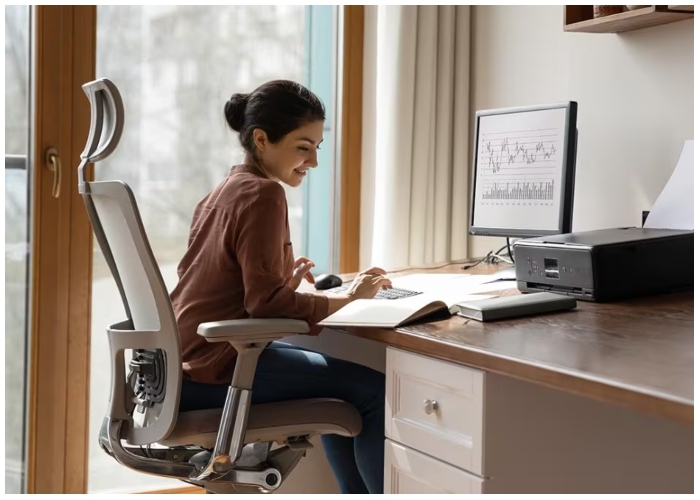
Many remote workers in 2025 rotate between a standard chair and an exercise ball or kneeling stool to engage different muscles throughout the day. The key is variety and support; no chair is healthy if you sit in it nonstop.
Screen Placement for Eye and Neck Health
Next, position your monitor so the top of the screen is at—or slightly below—eye level. This keeps your neck in a neutral position and reduces the risk of tech neck. Tilt the screen back 10 to 20 degrees and place it about an arm’s length away.
If you use a laptop, consider a stand plus an external keyboard and mouse. Good lighting is equally important: aim for natural light from the side to minimize glare, and use a soft desk lamp for evening work to prevent eye strain.
Lighting That Boosts Mood and Focus
In 2025, smart bulbs with adjustable color temperature are popular for home offices. Cooler light (around 5000 K) in the morning keeps you alert, while warmer light (around 3000 K) in the afternoon signals your body to wind down.
A simple desk lamp with a dimmer can achieve a similar effect. Position lights to avoid harsh shadows on your screen or workspace. If windows create glare, use sheer curtains or adjustable blinds—your eyes will thank you.
Movement Micro‑Breaks
Even the best chair and desk can’t replace movement. Health experts in 2025 recommend a quick stretch or walk every 30 to 60 minutes. Set a timer, use a smartwatch alert, or follow the Pomodoro method—25 minutes of focus followed by a 5‑minute break.
Stand up, roll your shoulders, stretch your hamstrings, or do a few squats. These micro‑breaks improve circulation, reduce stiffness, and refresh your mind so you’re more productive over the long haul.
Cable Management and Clutter Control
A tidy workspace helps your brain focus. Use cable clips, Velcro ties, or a simple box to corral cords and chargers. Keep only essential items on your desk—laptop, notebook, water bottle—and store extras in drawers or bins within reach.
Clean lines and minimal clutter create a calmer visual field, which translates to less cognitive load and better concentration.
Adding Personal Comfort Touches
Ergonomics isn’t just mechanics; it’s also about mental comfort. A small plant improves air quality and mood. A framed photo or art print can inspire without distracting. Keep a water bottle and healthy snacks handy to stay hydrated and fueled. Temperature matters, too: a desk fan, space heater, or lightweight blanket lets you adjust quickly without leaving your workspace.
A well‑designed home office in 2025 is a blend of ergonomic principles and personal comfort. By adjusting desk height, choosing supportive seating, positioning your screen correctly, and incorporating movement, you create an environment where your body thrives and your mind stays sharp. Small tweaks—a cushion here, a lamp there—add up to big improvements in energy and well‑being. Invest a little time in your setup now, and you’ll reap the rewards every working day.